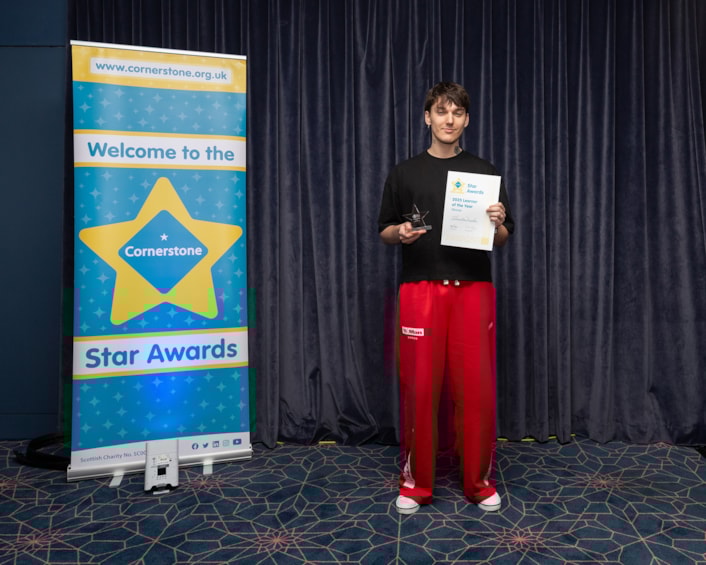
As part of our #SSSCregistered campaign we’re sharing real life experiences of registrants who have recently gained their qualifications, alongside training providers and SVQ assessors to help the social care and children and young people workforce across Scotland learn more about the benefits of qualification and the support available.
Today, we share Vilmantas story.
What does it mean to you to be SSSC registered?
Being registered with the SSSC to me means upholding a professional standard that shapes our lives; and the individuals that we support around us, day to day. Registration ensures we meet the standards, and not only gives us the tools, but the resources to leap further into our careers. Registration is not optional for me; it represents accountability, responsibility and commitment to safe, ethical and person-centred practice; this recognition ensures public trust to the people we support; as the standards dictate competency.
How did you get into working in social care?
My journey into social care was a natural development. My own family had been involved within the sector as children and family practitioners. With a little encouragement and recognition of my skills and personality; they felt I would be suited to this line of work.
How did you feel before starting your qualification?
Before starting my qualification, I felt understandably nervous. I began the process only one year into my career, which felt earlier than most. At the time, I was concerned about my level of experience; however, my colleagues and managers had confidence in my ability and strongly encouraged me throughout the process. Their support played a key role in helping me develop confidence in both my learning and my practice.
How did you evidence learning for assessment?
Much of my assessment evidence came from work I had already developed, including detailed guidelines and routine documents for an individual I had supported consistently for over two years. Due to the complexity of the individual’s needs, I was involved in regular observations, multi-disciplinary team meetings, professional discussions and collaborative planning with team members. This body of work provided substantial evidence, which was further strengthened through witness testimonies. I also supported colleagues through shadowing and training sessions to help them adapt and implement these routines effectively.
How relevant is the qualification requirements to the work you are doing?
The qualification was highly relevant to my role. A key aspect of person-centred care is ongoing reflection and adaptation; and the qualification placed strong emphasis on reflective practice. This not only supported safe and capable working, but also encouraged critical thinking around protocols, values, and daily decision making. The reflective elements directly influenced and improved the documents and routines I had developed, leading to more positive outcomes for the individuals I support.
What words of advice would you give someone who still needs to gain their qualification?
Everyone’s experience with qualifications is different, and many people find the academic side challenging. My main advice would be to remember that you are not doing it alone. Tutors, colleagues and managers are there to support you throughout the process. Focus on what the qualification enables rather than the difficulty of completing it. Gaining your qualification helps strengthen your practice, build confidence and recognise the work you are already doing. Ultimately, it opens doors to further opportunities and allows you to clearly demonstrate the value you bring to the lives of those you support.

What his employer says
‘Vilmantas consistently produces high quality, well-researched assignments that are used to develop and refine care plans, guide team routines, and induct new team members.
‘His learning enhances his natural practical support style, allowing him to really understand the people he supports and drive significant progress.
'Through his work, he has guided the team in implementing routines that have been transformative in care delivery. His technical skills in crafting and presenting assignments are impressive, particularly given that English is not his first language.'